
3 Subwoofer Port Options for Enclosure Builds in 2026
As an Amazon Associate, this website earns from qualifying purchases.
The short answer
Choose a subwoofer port from its clear area, effective length and available space. Compare 2-inch and 3-inch flared kits with sheet stock for a custom slot. A flare is not a guarantee of noise-free output.
Our top 3 picks
- 1Smaller flared kit
 Precision Port 2-inch flared tube kit
- Nominal 2-inch flared kit
- 4.25-inch mounting cutout listed
- Up to 11-inch port length listed
- 2Larger flared kit
 Precision Port 3-inch flared tube kit
- Nominal 3-inch flared kit
- 5.25-inch mounting cutout listed
- Up to 17-inch port length listed
- 3Custom slot material
 MakerStock 18 mm Baltic birch panel
- 18 mm nominal Baltic birch plywood
- 24 by 48-inch nominal sheet
- B/BB face grade listed
#1. Precision Port 2-inch kit: smaller flared throat
Precision Port 2-inch flared tube kit
Our verdict:
Smaller flared kit
Use it only when the required area and effective length suit this smaller flared vent.
Keep in mind: Check airspeed and effective length; small diameter alone is not a useful fit rule.
View on Amazon- Nominal 2-inch flared kit
- 4.25-inch mounting cutout listed
- Up to 11-inch port length listed
The 2-inch kit is a cut-to-length flared vent assembly. Its current catalog lists a 4.25-inch mounting cutout and a port length up to 11 inches. Those sizes describe different parts of the kit: the nominal throat, the mounting opening and the assembled length.
Use the Precision Sound assembly and length guide for the flares. Read the current sheet before you cut. The tube's cut length may differ from the full port length. The length used in the acoustic model can differ from both.
This option suits a design with a verified need for the smaller throat. It is not our default way to save box space. If the smaller clear area creates an airspeed or output problem in your model, a flare does not prove that the problem has gone away.
#2. Precision Port 3-inch kit: larger flared throat
Precision Port 3-inch flared tube kit
Our verdict:
Larger flared kit
A larger throat option when its flare and full tube envelope fit inside the enclosure.
Keep in mind: The larger flare needs a 5.25-inch mounting opening and more clearance around the mouth.
View on Amazon- Nominal 3-inch flared kit
- 5.25-inch mounting cutout listed
- Up to 17-inch port length listed
The PSP3-BKHT is the nominal 3-inch kit. The current catalog lists a 5.25-inch cutout and a port length up to 17 inches. It is a different area and packaging choice from the 2-inch kit, not a color variant selected to pad this list.
For ideal circular throats of exactly 2 and 3 inches, the areas are about 3.14 and 7.07 square inches. That is a calculation from pi times diameter squared divided by four. The larger area is 2.25 times the smaller one. These are nominal-geometry examples, not measured clear bores of the delivered kits.
Use the actual clear diameter from the current drawing or measurement in your final model. At a fixed box volume and tuning, a larger area generally needs a longer effective vent. Check whether that length and both flares fit before cutting the baffle.
#3. MakerStock panel: a custom slot construction route
MakerStock 18 mm Baltic birch panel
Our verdict:
Custom slot material
This is a useful sheet option for a measured plywood box, brace or slot partition.
Keep in mind: A sheet is material, not a ready-sized port. The clear opening and occupied envelope must be designed.
View on Amazon- 18 mm nominal Baltic birch plywood
- 24 by 48-inch nominal sheet
- B/BB face grade listed
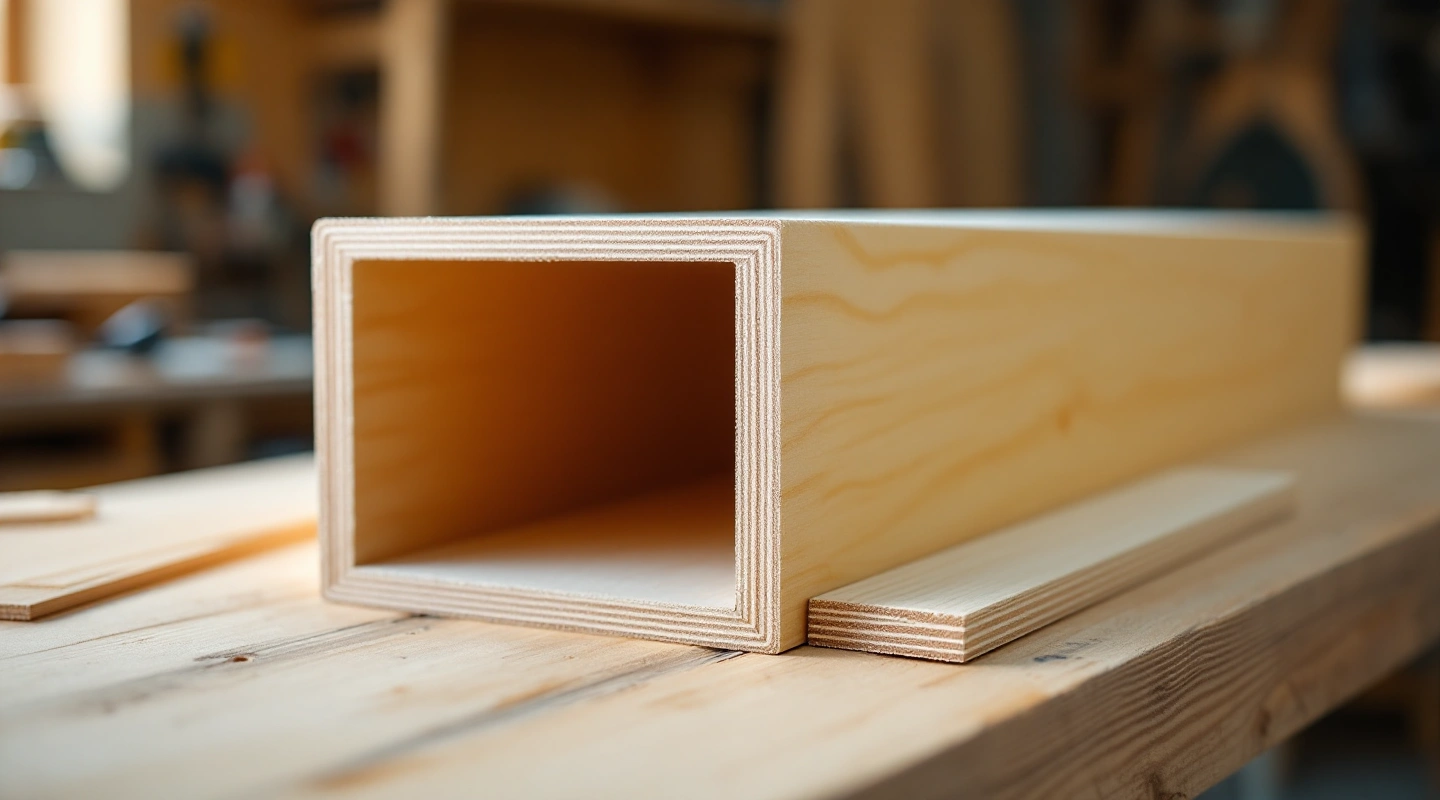
The 18 mm nominal plywood sheet provides material for slot partitions. It is not an acoustic port kit. A slot can use existing enclosure walls for some sides. Draw the other walls with their thickness and position shown, then label the clear opening.
For a labelled example, a 2 by 8-inch clear section has 16 square inches of area. That calculation says nothing about the required length or safe output. The port calculator can explore a straight constant-section case with explicit end correction and net airspace.
Measure the actual board thickness before drawing the outer envelope. A 2-inch clear slot between two boards is wider than 2 inches overall. The volume ledger must account for the internal vent's space and the partition solids without counting the same occupied region twice.
Factors to consider when choosing a subwoofer port
Match length to the chosen construction
A plain tube, a flared kit and a slot have different ends. These kits offer two throat sizes. The sheet lets you build a custom slot. A correction for a plain tube does not prove the model is right for either flared kit.
UNSW's Helmholtz page explains the simple resonance model and end effects. Our tuning guide links that model to the box ledger. A folded duct or large flare may need a different model. Check the finished alignment too.
Keep clearance in the drawing
Draw both port mouths and the magnet in one plan. Add the braces and wire route to the same drawing. A long port may fit across an empty box yet hit the driver once it goes in. Check the space outside the mouth too. Cargo can block it even when the shell fits the car.
There is no universal noise-free port area on this page. Required area depends on the driver, drive level and alignment. Read the port-noise guide for the distinction between geometry and a measured clean-output limit.
If you are adding a vent to a sealed shell, check the conversion guide before buying parts. Confirm that the new alignment suits the driver.
How we picked the subwoofer port options
The two flared sizes serve different area and length needs. The sheet-stock pick serves a custom slot drawing. Follow the linked maker's assembly guide for the flared kits.
We compared nominal area separately from the larger mounting opening. None of these records supplies a universal noise limit. We did not build the ports or measure their output.
Subwoofer port verdict
Choose a subwoofer port that fits the complete modeled alignment. Check the actual throat and the kit's assembly method, then draw its full space claim. Choose the plywood route only with a complete slot drawing. Return to the ported-versus-sealed guide if the vent cannot fit the planned enclosure.
Frequently asked questions
Are the two port kits interchangeable?
No. They have different throat areas, mounting openings and length limits. Recalculate the alignment when the vent changes.
Is the plywood pick a finished slot port?
No. It is sheet stock. You must design the clear opening, length, partition solids and full occupied envelope.
Last updated