
Ports and tuning
Can You Port a Sealed Subwoofer Box?
Last updated
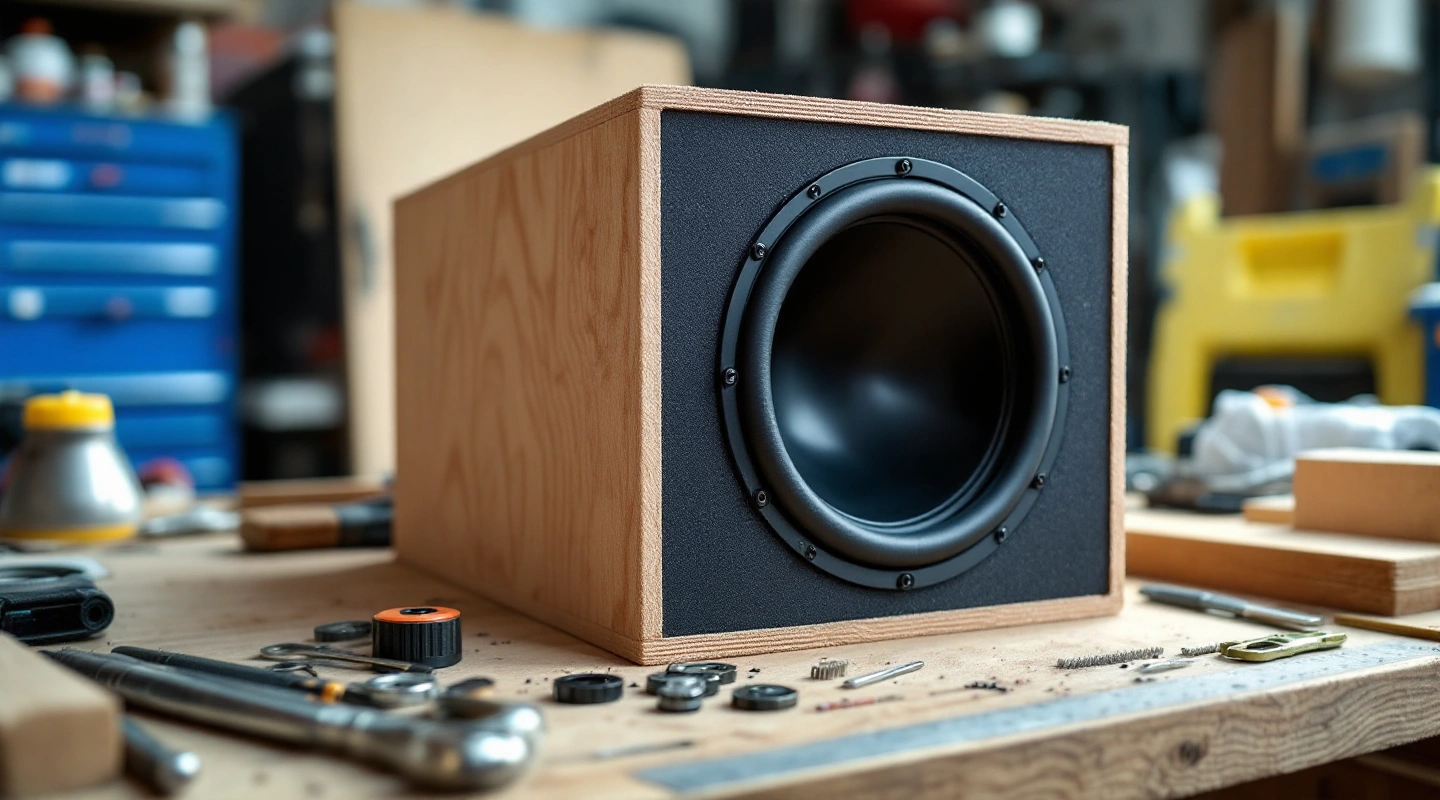
Can you port a sealed subwoofer box? Sometimes, if the driver and cabinet suit a stated ported design. Cutting a hole is only one step. Check the exact driver's vented target and the airspace left inside. The vent also takes up space and needs a clear route.
Treat the conversion as a new alignment. A port needs a defined clear area and effective length, and its inside envelope takes up cavity space. The driver must suit the proposed vented design and operating limits. If the existing shell cannot contain the required net airspace and vent clearance, use another box rather than forcing a tube into it.
On this page
1. Check the driver before changing a sealed subwoofer box
Find the full model code and its box designs. A manual may provide both sealed and vented designs, or it may specify only one. Do not infer fit from cone diameter or a general Qts cutoff. The model reference keeps separate rows for each stated box type.
Read the operating conditions too. KICKER's construction guide discusses cone behavior below vented tuning and the need for a suitable alignment. A new port can change that behavior even when the driver and amplifier stay the same.
If a ported design is absent, this simple layout tool cannot create a complete alignment from Fs and Qts alone. Keep the result as unknown rather than inventing a port frequency that sounds plausible.
2. Audit the sealed subwoofer box cavity
Measure the inside shell. Subtract the space taken up by the driver, braces and terminal. Check what the seller meant by box size. It could mean outside volume, empty cavity or net airspace. Use the same basis as the driver's vented target.
For a synthetic example, an existing sealed box has 1.50 cubic feet gross. Installed driver and other fixed intrusions occupy 0.10. Its current true net space is therefore 1.40 cubic feet. That number does not stay fixed when a vent is installed.
Suppose a hypothetical stated vented design needs 1.40 cubic feet net. The existing cabinet is not by itself large enough. The new vent takes space, so the empty cavity must grow unless another legitimate occupied-space change makes room.
3. Allow for the vent envelope
Take a purely illustrative tube with outside diameter 4.25 inches and 12 inches of length inside the cavity. Its excluded inside envelope is π × (4.25/2)² × 12, or about 170.235052 cubic inches. That is 0.098516 cubic feet.
Putting this tube into the example box would leave about 1.301484 cubic feet net, before any extra support or fittings. The old sealed net number cannot serve as the vented calculator's input after that change. These tube sizes are example layout, not a recommended port.
For a slot, add the duct air to the volume of its inside partitions. A shared cabinet wall has already been counted in the shell layout. The port area guide explains how clear area differs from the space occupied by the whole duct.
4. Check the route and alignment
Enter the final net cavity in the port calculator. Keep the clear section and physical length with the result. Also record the end treatment and assumed sound speed. A round-tube correction does not cover every flare or folded slot.
Now draw the whole duct inside the box. Check the driver motor, braces and terminal cup against it. Check the inlet and outlet clearance from their actual documentation. A port that appears to fit diagonally may still cross the motor envelope or leave the opening restricted.
If a larger clear area is needed, its required length can grow for the same tuning. That uses more space. Solve the cavity and vent together, then return the computed layout to the target. Do not keep only the first iteration that gives a positive number.
Decide whether to keep the original shell
First find a vented design for the exact driver. Then check whether the old shell can hold it. Draw the whole vent and its clearances. Leave enough panel material around the new hole to mount and seal the vent.
If the vent cannot fit with its required clearance, use a larger shell. Do not add a fold and assume that effective length stays the same. A new fold or flare needs its own end treatment. Keep the source or state the assumption you used.
Save the sealed design before cutting it. That keeps the old ledger available for comparison. Use the ported build sequence to check the new shell. Finish those checks before assembly.
FAQ
Can I just drill a round hole?
A hole without a defined vent length and alignment is not a checked ported design. It changes the box's air path and behavior. Read the exact driver's designs, work out the remaining net cavity and specify the vent layout. A sealed-box volume label does not prove that the conversion will work.
Will a port always make the system louder?
Adding a port does not prove a rise in output. The result depends on the complete driver-and-box system and its signal. This page does not model loudness or safe power. A vent can also change cone control below tuning. Follow the maker's operating and filter instructions.
Can I use the old sealed net volume in the port calculator?
Only after updating it for the new vent and any added hardware. The tube or slot envelope removes cavity space. Use the final true net airspace rather than the empty shell or the pre-conversion result. Unknown space taken up must remain unknown instead of being silently treated as zero.
Can I seal the port again later?
That is another box revision. A plug needs to be secure and airtight, and the resulting sealed net volume must suit the exact driver. Account for its occupied space. A loose object pushed into a port during playback is not a stated conversion and can create other problems.
Verdict
Can you port a sealed subwoofer box? Check the complete vented design before cutting. Keep any missing target or duct data visible, along with unknown clearances. Use the box planner to compare a new shell.