
Ports and tuning
How to Calculate Port Area for a Subwoofer Box
Last updated
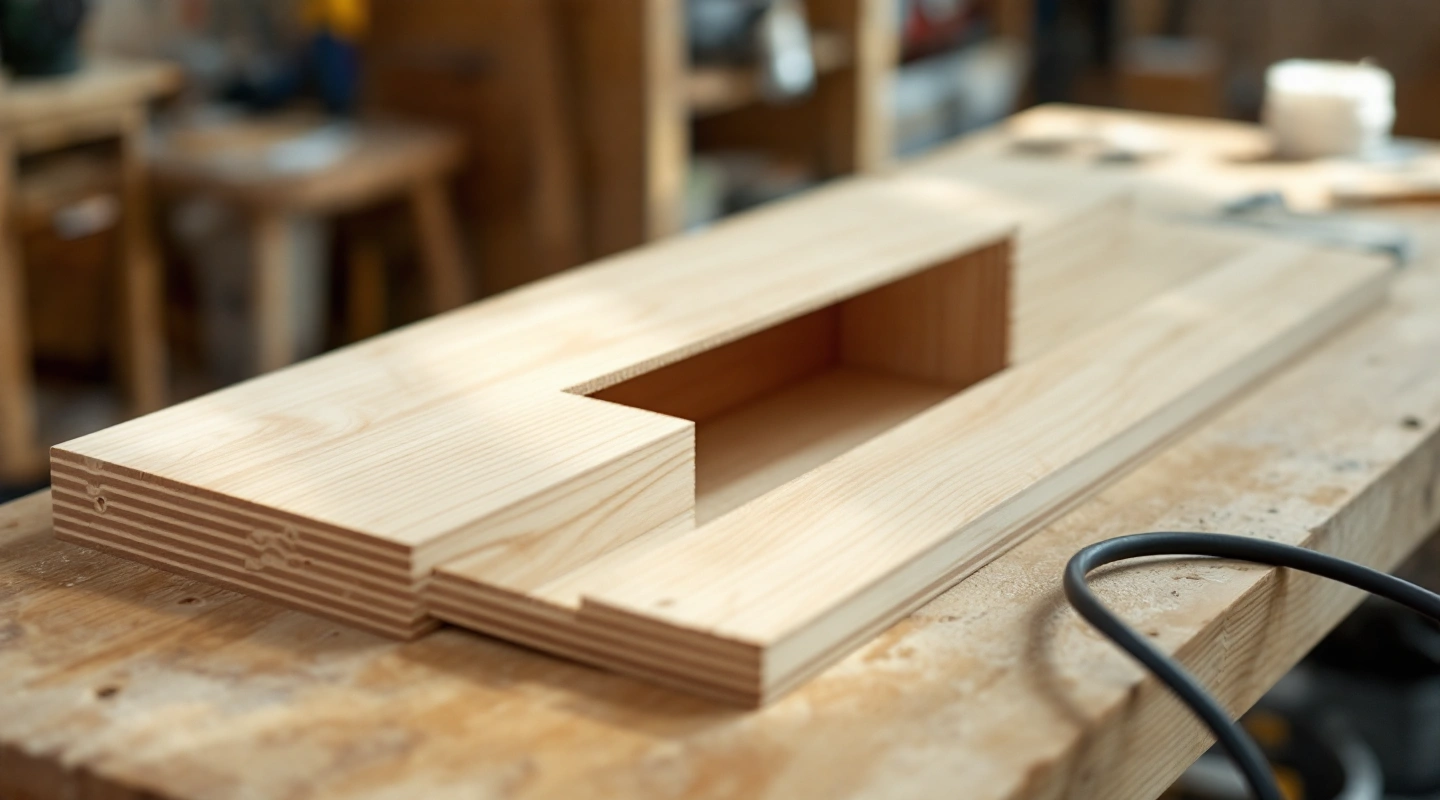
To calculate port area for a subwoofer box, measure the clear air passage. Use inside diameter for a round port or open width times height for a rectangular slot. Keep area separate from the outside envelope that takes up cavity space.
Round area is π times the inside radius squared. Slot area is clear width times clear height. Add the areas of identical ports when the design uses more than one. These equations do not choose a safe area per watt or per cubic foot. A complete vent design also needs true net volume, effective length and a stated alignment.
On this page
Measure port area for the subwoofer box
The clear section is the opening available to air. On a tube, its outside diameter includes the wall and is not the right diameter for area. On a slot, measure between the finished inside faces. Carpet, adhesive or a protruding screw can reduce that space.
For an uneven or changing section, one opening measurement does not describe the whole duct. Record the restriction and use the actual vent documentation. A simple constant-section calculator cannot prove a tapered or irregular passage from its largest opening.
The KICKER construction guide links vent area and length to box behavior. Read the exact driver's source design before replacing its vent with one that has a different section.
Round port worked example
A tube with inside diameter 4 inches has radius 2 inches. Its clear area is π × 2², or 12.566371 square inches. Two identical ports of that size have total area 25.132741 square inches.
A single circular opening with the same total area has diameter about 5.656854 inches. Its end correction and occupied space still differ from those of two smaller tubes. Keep the number and radius of the actual ports in the acoustic calculation.
If the tube's outside diameter is 4.25 inches, use that size to check occupied space and fit. With 12 inches of tube inside the cavity, its outside envelope occupies about 0.098516 cubic feet. Clear area uses inside diameter; occupied space uses outside diameter.
Slot port worked example
A clear slot 2.5 inches wide and 12.5 inches high has area 31.25 square inches. If a finish or construction error reduces the width to 2.25 inches, area becomes 28.125 square inches. Measure the final duct rather than continuing to use the original drawing.
The CompR manual supplies a stated 2.5 × 12.5-inch example with its matching length and box convention. That source fact is not a general slot size for every CWR generation or every 12-inch driver.
For displacement, work out the duct air and its actual inside partitions. A slot that shares a cabinet wall does not gain a second physical wall just because a generic outer-box formula adds one. Count the occupied material from the real section drawing.
Convert area units correctly
One inch is exactly 2.54 centimeters. Squaring that relation gives 6.4516 square centimeters per square inch. A 31.25-square-inch opening is therefore 201.6125 square centimeters. Do not apply the linear conversion only once to an area.
For SI acoustic equations, convert lengths to meters and square them for area. Convert net volume to cubic meters as a separate step. Mixing square inches with cubic meters produces a meaningless result even when the displayed frequency looks plausible.
The port calculator normalizes those units internally. Check the chosen unit mode before entering a number copied from a manual. Keep its original unit beside the source row in your saved record.
Connect port area to the subwoofer box volume
The rough Helmholtz relation is Fb = c/(2π) × √(A/(Vnet × Leff)). At fixed net volume and tuning, a larger total area requires a larger effective length. It is not a free change: the longer duct may occupy more cavity space.
UNSW's resonance explanation also shows why physical length differs from effective length. End effects depend on layout. A slot with the same area as a circle does not by itself use the circle's correction.
After changing area, solve the vent and net cavity again. Draw the new route and check its openings against the motor, braces and nearby walls. Read the tuning guide for the inverse check that closes the math loop.
What this math cannot choose
These equations do not prove a fixed area-per-watt rule. Port velocity depends on the driver, signal and box behavior. An area calculation does not model those factors or set a power level free from airflow noise.
Start with an exact maker's alignment where available. If noise is already present, use the chuffing diagnostic guide to distinguish a vent restriction from a seam leak or loose part. Enlarging the opening without changing length can change tuning while leaving the real cause unresolved.
FAQ
Do I use inside or outside diameter?
Use inside diameter for clear acoustic area. Use outside diameter for the tube's occupied inside envelope and physical fit. Keep both fields separate when the wall thickness matters. Entering outside diameter as clear area overstates the passage and can make the tuning estimate inconsistent with the real tube.
Can two small ports equal one large port?
Their total clear areas can match, but layout and end effects still differ. Keep the actual port count and each tube's geometry in the calculation. The cabinet must fit every tube with its required clearance. Equal area alone does not prove equal tuning, noise behavior or occupied cavity space.
What is the best port area per cubic foot?
This guide gives no fixed ratio. The exact driver alignment and operating conditions matter, and area alone cannot prove velocity or safe output. Use a stated vented design, then check its layout. A rule of thumb without those limits should not be presented as a validated design need.
Does a flare change which area I enter?
Use the vent maker's instructions for its clear section and effective length. A flared mouth does not mean the entire duct has the mouth's area. The constant-section equation needs an input that represents the actual assembly. Do not enter the largest visible opening and assume the rest follows.
Verdict
Learning how to calculate port area for a subwoofer box starts with its clear opening. Keep tuning and occupied space in the same plan. Use the port worksheet for the next step.